
Hazard Risk Factors In Andaman Trip
Stay Informed. Stay Safe. Travel Smart.
Planning a trip to the Andaman & Nicobar Islands? While the islands are beautiful and welcoming, it’s important to be aware of certain hazards and risk factors that may affect your journey. Being prepared can help you have a safe and worry-free trip.
The biggest adventure you can take is to live the life of your dreams
Traveling to the Andaman Islands offers breathtaking experiences, but it’s important to stay aware of potential risks. Sea currents can be strong, especially during water sports like snorkeling or diving — always follow your guide’s instructions. The monsoon season (June to September) brings heavy rainfall and can disrupt ferry schedules or restrict outdoor activities. Healthcare facilities outside Port Blair are limited, so carry essential medications. Avoid entering tribal reserve areas, as these are legally protected and off-limits for tourists. With mindful planning and respect for local rules, your Andaman adventure will be safe, smooth, and memorable..
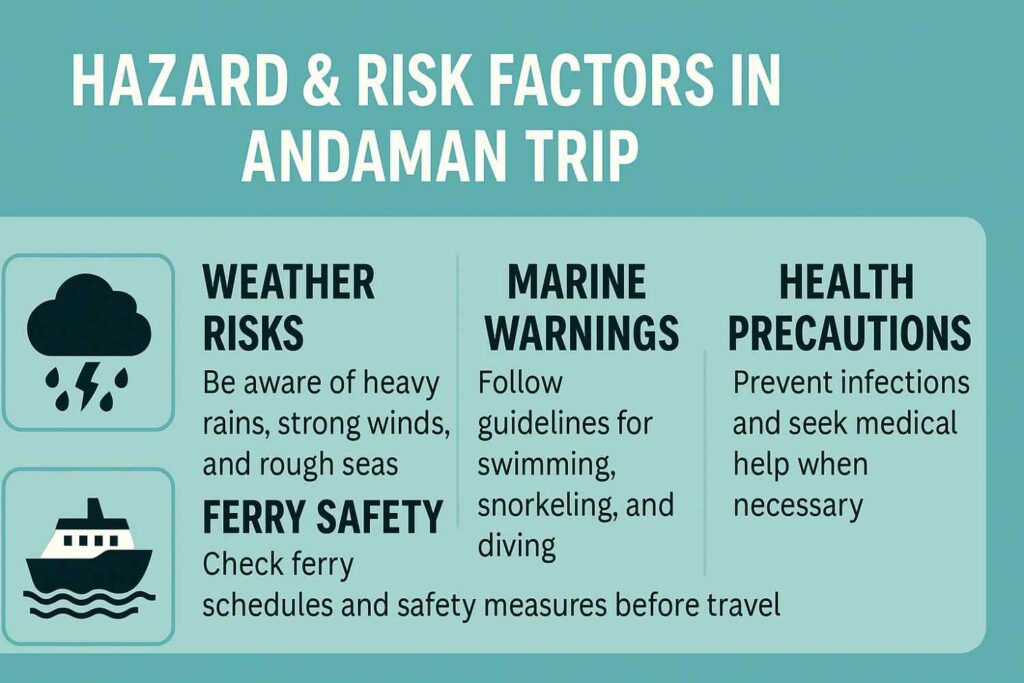
1. Strong Sea Currents & High Tides
Risk: Some beaches may have strong undercurrents, especially during the monsoon or rough sea conditions.
Tip: Always swim in designated areas, obey warning signs, and avoid venturing out alone or at night.
2. Monsoon Hazards (June–August)
Risk: Heavy rains can cause ferry delays, flight cancellations, and slippery trekking paths.
Tip: Avoid monsoon travel unless essential. Always check ferry schedules and weather updates in advance.
Risk: Coral cuts, jellyfish stings, or encounters with sea urchins while snorkeling or swimming.
Tip: Always wear water shoes or fins; follow dive/snorkeling guides strictly; avoid touching marine life.
4. Limited Medical Facilities
Risk: Serious medical emergencies may require evacuation to mainland India.
Tip: Carry essential medicines, first-aid kit, and purchase travel insurance with emergency evacuation cover.
5. Tribal Area Restrictions
Risk: Heavy rains can cause ferry delays, flight cancellations, and slippery trekking paths.
Tip: Avoid monsoon travel unless essential. Always check ferry schedules and weather updates in advance.
6. Limited Mobile & Internet Connectivity
Risk: Remote islands may have poor network coverage, affecting communication.
Tip: Inform family/friends in advance, save offline maps, and keep printed copies of tickets and itineraries.
7. Heat & Dehydration
Risk: The tropical climate can cause heat stroke or dehydration, especially in kids and elderly.
Tip: Wear light clothing, stay hydrated, avoid direct sun between 12–3 PM, and carry a reusable water bottle.
8. Insects & Wildlife
Risk: Mosquitoes (esp. near forests or in the evening) can be a nuisance.
Tip: Carry mosquito repellent, wear full sleeves during treks, and avoid forest trails without a guide.
Travel With Confidence – Andaman Expedition Has You Covered
We at Andaman Expedition ensure that your trip is not only fun but also safe. From weather updates to ferry bookings and certified guides for water sports — we’ve got your back.
The Andamans are safe for tourists, but awareness is key. Know the risks, plan smart, and enjoy your island getaway with peace of mind.
📞 Need help planning?
Visit: www.andamanexpedition.com
Email: info@andamanexpedition.com
Is it safe to visit the Andaman Islands?
Yes, Andaman is generally safe for tourists. Most visits are trouble-free, but it’s important to follow local guidelines, respect restricted areas, and stay updated on weather conditions, especially during monsoon season.
Is it safe to swim or snorkel in Andaman?
The most common risks include rough seas during monsoon, ferry delays, limited medical facilities in remote islands, and minor marine hazards like jellyfish or coral cuts.
Can I visit tribal areas or meet indigenous tribes?
Swimming and snorkeling are safe in designated areas when guided by certified instructors. Avoid strong currents, wear protective gear, and follow local safety instructions.
Are ferries in Andaman reliable?
Ferries are reliable most of the year, but during monsoon (July–September), weather can cause delays or cancellations. Always confirm ferry timings and book through trusted travel agents.
What are the medical facilities like in Andaman?
Medical care is available in Port Blair, but remote islands may have only basic aid. It’s recommended to carry personal medications and a small first-aid kit.
Are there any natural disaster risks like tsunamis or earthquakes?
The region is seismically active. While rare, earthquakes and tsunami risks do exist. Always follow local advisories and safety instructions if any alerts are issued.
How reliable is mobile and internet connectivity?
Mobile networks (Airtel, BSNL, Jio) work in Port Blair but may be weak or unavailable on remote islands. Be prepared for a digital detox.
Is it safe to swim or snorkel on your own?
It’s strongly advised to only swim or snorkel in designated zones and with certified instructors, as sea currents can be unpredictable.
Are there any legal restrictions I should know?
Yes. Avoid carrying plastic, do not enter tribal areas, and do not use drones without government permission. Violating these rules can result in fines or legal action.
What is the best way to travel safely in Andaman?
Book with trusted operators like AndamanExpedition.com, follow your guide’s instructions, avoid restricted zones, and stay informed of local advisories. We handle the rest.